Wednesday, December 12, 2007

Giving betta fish Prozac?

Giving betta fish Prozac?

I was surprised to see a story about betta fish on the “Advances in Physiology Education” website. It seems male betta fish are “an attractive model for the study of aggressive behavior” and the study finds that in the male Betta splendens given Prozac, that the small dose of Prozac was “sufficient to reduce the expression of specific aggressive behaviors”. Here is the webpage----> http://advan.physiology.org/cgi/content/abstract/31/4/358

Labels: , , , ,

Tuesday, October 30, 2007

Betta Fish Picture


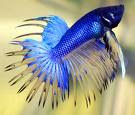
A picture of a beautiful betta fish

Labels: , , ,

Wednesday, September 26, 2007

Betta Fish Care Terms

Here are some terms commonly used when talking about fish and aquariums (betta fish and other fish too!).

CRI; Color Rendering Index
A rating used for light bulbs on a scale up to 100, where 100 is equal to sunlight.

Detritus
The organic waste matter that collects on the bottom of your fish tanks.

Fry
A fully formed baby fish.

Pectoral fins
Paired fins, one on each side of the body located behind the gill covers.

Labels: , , , , ,

Wednesday, August 15, 2007

Why Breed My Betta Fish?

Most people first start breeding betta fish to see the breeding process themselves and see if they can do it. There are some people who breed betta fish solely to sell them but most got addicted after successfully breed their first batch of betta fry and sell their betta fish to support their habit! You see, a bettas color depends on its parents, so it becomes very addicting trying to match a male betta and a female betta with just the right coloring to complement each other.

If you are looking for an all in one betta fish breeding and care guide that will show you how to have stunning aquariums full of Betta fish that will successful breed, check out "Taking the Mystery Out of Betta Breeding" written by Tho Le. Tho Le has been passionate about Betta fish for over 10 years and has uncovered hundreds of tips, techniques and secrets about Betta fish care and breading that no one else seems to know.

Labels: , , , , , ,

Thursday, June 28, 2007

Betta Fish Diet

In the wild Betta fish subsist almost exclusively on insects and insect larvae, they even have an upturned mouth that is well suited to snatching any unsuspecting insect that might fall into the water. Internally a bettas digestive system is geared for meat, and for this reason, live foods are the ideal diet for the betta, however they will adapt to eating flake foods and frozen and freeze dried foods. Brine shrimp, Daphnia, tubifex, glassworms and plankton are all excellent options that may be found frozen or freeze dried. If flake food is fed, it should be supplemented with frozen and freeze-dried foods, and when possible live foods.

Labels: , , , , , ,

Thursday, April 26, 2007

Secrets For Caring For Your Betta Fish

How would you like to learn the secrets to keeping and breeding betta fish? These techniques will give you the most colorful, healthy and active fish you have ever seen.

Just check out this amazing new website for more info:

Betta Fish Secrets

The owner, Mike has just released an incredible new ebook with all his tips and techniques learned over the years in it.

Just by going to the site you can discover the most common reason betta fish become sick with disease and how 90% of the time it comes down to the same thing that can be avoided very easily.

Just make sure you take a look at this site today as he's giving away a free betta fish info gift worth $197 that has taken him months to produce!

Here's the link to the website:

Betta Fish Secrets

Labels: , , , , ,

Friday, March 30, 2007

The Essentials of Proper Betta Fish Care

Betta Fish, also known as Betta Splendens, Beta Fish and Siamese Fighting Fish, are inexpensive pets and can be quite lovely. Technically, the Betta name refers to about fifty species, but is commonly used as if only Betta splendens is meant. The biggest are normally only around three inches long. Even though there are many stories of the fish surviving in very small containers, experts do recommend a three-gallon tank for best results and there is some controversy about how small a tank is really still acceptable. Betta Fish are native to low oxygen waters, and don’t normally need any aeration. They are tropical fish, and are best kept warm, however. Some owners do claim that their Bettas act happier with an air filtration system even if the fish don’t need it to survive. Bettas normally live two to three years, but in well cared for conditions, some have lived as long as ten.

Betta Fish are native to Thailand and Cambodia. The common name comes from the name of Siam, which is now Thailand, and the territorial battles the males conduct. Like many members of the animal kingdom, the males are the gaudier looking, to better attract females. The females tend to appear rather dull, and almost all Betta Fish sold are males for that reason. In the wild, they are dull greens and browns, but breeders have produced far more stunning color schemes.
Some believe that Bettas cannot be kept with other fish. This is not true. Multiple male Bettas is a precondition for battle. Bettas with other fish around will still display and flare their fins, but won’t see this as a mortal insult. They should not be kept in a tank with fish that are aggressive or that nip fins, and only one male should be present. Female Bettas can usually play well with others, and there are cages to be used to separate male Bettas if they are kept in the same tank. These should prevent the fish from seeing each other.

Betta Fish can handle a surprising range of water conditions, but the water should be changed once a week or so, more often if the fish is kept in a small container. They can be fed once a day, or twice if you desire, and aren’t especially fussy about their food. There is specially formulated Betta food on the market. In the wild, Bettas eat live food, insects and their larvae, and like it in fish tanks, but they will eat flakes and frozen food as well. Do not overfeed as this will require cleaning the tank more often. When changing the water, remember to let the water sit for a day before using it in the tank with the fish to allow the chlorine to evaporate. Good choices for Betta food are brine shrimp, Daphnia, plankton, tubifex, glassworms, and beef heart, and may be used frozen or freeze dried. Flakes should be supplemented with other foods from the list.

Many note the odd bubble structures that male Betta Fish build in the water tank. This is perfectly normal. The male is building a nest in which to place eggs, once he successfully impresses a female.

Bettas prefer a pH between 6.8 and 7.4 and a hardness less than 20 dGH. The temperature should be between 75 and 86 degrees, or twenty-four to thirty for those who prefer Celsius. In the wild, they live in rice paddies, ponds and slow moving streams, and are most comfortable near the surface. One of the main arguments about the minimum size for the fish’s tank is heat. Below 75 degrees, the fish are increasingly listless and it is much easier to keep a larger tank at a stable temperature. Bettas also require access to the surface, and will drown without it. There is a special organ, the labyrinth organ, allowing and requiring them to take oxygen from the air. Because they live in still waters, power filters and power heads are not suitable.

Betta Fish are known for their lovely colors and fins, with a wide range of colors available. Blue to red with white are normal, and more spectacular colors like yellow and orange exist.

Metal poisoning easily kills betta fish, and exposed metal should not be used in decorations within the tank. Decorations are important as they allow the fish places to hide, and a layer of gravel helps to provide surface area to grow nitrifying bacteria. Decorations must be smooth and lack sharp points that can tear fins. Silk is preferred to plastic for artificial plants for this reason.

Sarah Munn is an animal lover, and currently own 7 pets (including her Betta fish, Margo). Sarah is a freelance author and editor, most recently editing the popular e-Book. "Betta Care Made Easy." Sarah would like to recommend the Betta Fish Care Newsletter as the best place to learn more about betta fish care.

Article Source: http://EzineArticles.com/?expert=Sarah_Munn

Labels: , , , ,

Friday, February 23, 2007

Betta Splenden - 5 Crucial Tips

Betta Splenden - 5 Crucial Tips

Welcome to your "5-Tip Crash Course" to raising happy, healthy Betta Splenden! Once you've absorbed these crucial tips, you'll quickly have your Betta Splenden smiling at you and thanking you every day for saving them from their suffocating plastic cups you originally found them in.

Betta Splenden are some of the most beautiful fish on the planet, who will constantly amaze your friends and family whenever they catch a glimpse of your fish tank. Bettas Splenden also have a personality of their own. If they're happy and healthy, they'll entertain you and make you smile warmly from the inside by waving their tails, dancing for you, and being extremely cute in general.

And heck, let's admit it: Once you've owned your first Betta Splenden, you'll realize - They're addicting!

So without further ado, let's get to your 5 crucial tips.

-

Crucial Tip #1: Your Betta's Tank

The temperature of your Betta Splenden's tank is extremely important for their health and well-being.

Betta Splenden originate from Thailand, Cambodia, and certain parts of Vietnam. In the Betta Splenden's natural habitat, the temperature is usually pretty consistent, between 22 to 28 degrees Celsius throughout the year. It's important to keep your Betta Splenden's tank consistently between these temperatures.

If the temperature drops below 22 degrees Celsius, your Betta Splenden's growth will be stunted, become prone to disease, or even die from chronic stress. Consistency is important as well, because constant temperature fluctuations will also stress out your Betta Splenden.


Crucial Tip #2: Quality of Water

As you probably know, to keep your Betta Splenden happy, you need to keep your water clean. By keeping your tank clean, you allow your Betta Splenden's immune system to work better, to take in more essential body salts, as well as get rid of harmful waste.

A good filtration system and the size of your tank are key to your Betta Splenden's happiness.
Filtration takes waste, uneaten food, and sometimes bacteria out of the waters, giving your Betta Splenden a better, healthier environment to live in. You have many choices on filtration systems, which are beyond the scope of this article, but even a basic system will save you time and frustration in water changes.

The more often you change your water, the more you'll stress out your Betta Splenden. The easiest way to avoid changing your Betta's water so often, and keep his water cleaner, is to 1) have a good filtration system, and 2) get a bigger tank.

The bigger your tank, the longer it takes before your water gets contaminated. Therefore, the longer before you have to change your tank.


Crucial Tip #3: Betta Splenden Are Jumpers!

Betta Splenden are "jumpers," meaning unless the walls of your tank are high, or you place something on top of your tank, they're very likely to jump out.

So make sure you top off your tank, so your Betta Splenden don't come flying out.


Crucial Tip #4: Betta Splenden Diet

Betta Splendens should be mostly eating meats. Frozen crayfish eggs, beef heart, baby and decapsulated brine shrimps, as well as bloodworms/brine shrimps are all great choices. Small amounts of lettuce or spinach can be mixed in for fiber.

This may be common sense, but avoid overfeeding your Betta Splenden.


Crucial Tip #5: Betta Splenden Are Fighters!

Again, this may be common sense, but putting two Betta Splendens in one tank is a big no-no! Two male Betta Splendens will almost always break out into a vicious fight. Female Betta Splenden put in the same tank are also known to fight each other, as are Male to Female.

The exception is if you're trying to breed Betta Splenden - In which case, the female Betta Splenden should be introduced to the male Betta Splenden before they have any chance of physical contact.

This can be done by placing a tall jar with the female Betta Splenden inside in the male Betta Splenden's tank. By doing so, you'll introduce the two Betta Splenden to one another, in an environment where they cannot start tearing each other apart.

-

Great! You've just taken a crash course in owning a happy, satisfied Betta Splenden. You're now versed in keeping your tank clean, your Betta Splenden's diet, and other basic Betta Splenden care tips.

There are many other great resources on Betta Splenden on the internet, so get out there and start exploring!

- Derek Kovin

About the Author
Discover how to keep your Betta in tip-top, happy condition; So you'll have an impressive, lively, vibrant and fun fish!

Learn more tips & secrets from a "Betta Splenden Pro," at:
http://www.find-out-inside.com/betta-splenden

Labels: , , , ,